Printed Circuit Boards (PCBs) are the foundation of modern electronic systems. Over time, organizations may face challenges such as missing design documentation, discontinued products, or aging electronic systems that are still critical to operations. In such cases, PCB reverse engineering becomes a professional engineering solution to ensure continuity, reliability, and system sustainability.
When Is PCB Reverse Engineering Needed?
PCB reverse engineering is required when original schematics, Gerber files, or bills of materials are unavailable. This commonly occurs with legacy systems, imported equipment, or products that are no longer supported by the original manufacturer. It is also used to diagnose recurring failures or upgrade existing boards without altering the entire system architecture.
In critical sectors such as medical devices, industrial automation, and telecommunications, reverse engineering plays a vital role in maintaining operational reliability and safety.
How Is PCB Reverse Engineering Professionally Executed?
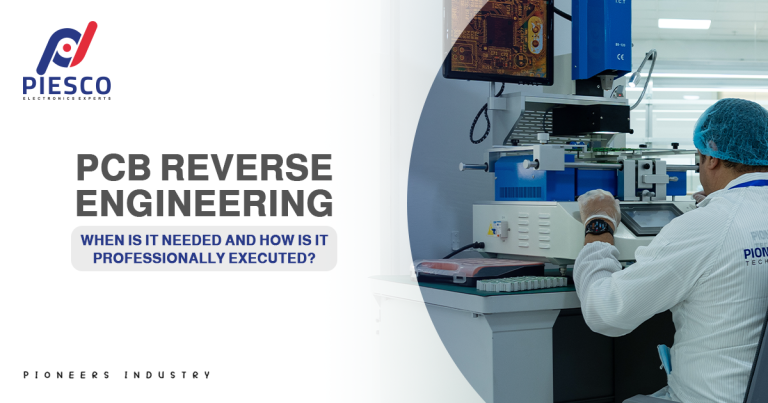
The process starts with a detailed visual inspection using high-resolution imaging tools to identify components, routing paths, and board layers. Electrical testing follows to analyze signal behavior, voltage levels, and functional performance.
For multilayer PCBs, advanced techniques are applied to reveal internal routing without damaging the board. Engineers then recreate complete schematics and PCB layouts using professional ECAD software. Finally, the redesigned board undergoes rigorous verification and functional testing to ensure it matches the original performance specifications.
The Importance of Engineering Expertise
PCB reverse engineering requires deep technical knowledge and precision. It is not a simple duplication process; minor inaccuracies can lead to instability or long-term failures. Professional execution, validation, and quality control are essential for reliable results.
PIESCO’s PCB Reverse Engineering Services
At PIESCO, we provide comprehensive PCB reverse engineering services, from analysis and documentation to redesign, testing, and re-manufacturing. Our engineering teams follow strict quality standards to deliver accurate, dependable solutions that support long-term system performance.
